


Can You be a Communist and a Christian? History Says No. Then Mustn't You Stand Against Religious Persecution? Yes, but How? Meet Sarah Makin.
by Kathryn van der Pol

Let's begin with six quotes.
1. Communist regimes, in their efforts to remake human beings, produce a deformation of the human person. This is why they brought and continue to bring such misery and destruction into the world.” ~Václav Havel, Czech dissident playwright, and first president of Czechoslovakia after the fall of the Soviet Union.
2. “Those who cannot remember the past are condemned to repeat it.” ~George Santayana, philosopher
3.“Democracy is the worst form of Government, except for all those other forms that have been tried from time to time.” ~Winston Churchill, Prime Minister of the United Kingdom in World War II.
4. “Each modern Western democracy fares better or worse at a given time depending on the place God’s wisdom holds in the hearts and minds of its voters. To the extent that the electorate is ungodly, the corrupt and godless officials they choose become a self-teaching lesson and even a self-inflicted punishment. The form of government may not be inherently flawed, but no system can thrive without embracing God’s wisdom. Communism is different. Founded explicitly on a rejection of God’s sovereignty, the system is not only inherently flawed but also inherently evil,” ~Cole Richards, President of Voice of the Martyrs
“The law of the LORD is perfect,
reviving the soul;
the testimony of the LORD is sure,
making wise the simple;
the precepts of the LORD are right,
rejoicing the heart;
the commandment of the LORD is pure,
enlightening the eyes;
the fear of the LORD is clean, enduring forever;
the rules of the LORD are true, and righteous altogether.”
Psalm 19:7–9
6. For from his fullness we have all received grace upon grace. For the law was given through Moses; grace and truth came through Jesus Christ. ~ John 1:16–17
You may wonder how the six quotes fit together.
They are a progression of thought, at least in my brain.
Beginning with the first quote: People who live under Communism today, live under the pressure of supporting an ideology that is a lie. They are required to mouth an ideology that proclaims justice, but which is inherently unjust. They are required to denounce freedom and capitalism “as oppressive.”
When Gorbachev came to the United States and spoke on May 6, 1992, at Westminster College, in Fulton, Missouri, it was dubbed “his end of the Cold War speech.”[1] He called for a new world order, a global tax to strengthen the United Nations. He also called to have a UN peace force to enforce the peace saying, “Considering the impartially examined experience obtained in the Middle East, in Africa, in Southeast Asia, Korea, Yugoslavia, the Caucasus, and Afghanistan, a special body should be set up under the United Nations Security Council with the right to employ political, diplomatic, economic, and military means to settle and prevent such conflicts.”
Do these sound like good ideas to you? He said that you can't have half of the world democratic and the other half not. Let’s put it another way. Gorbachev is saying that you can't have half of the world communist and the other half not. He wished to appear to us western and democratic, but was he really? What he did succeed in was to take away the image and name of the enemy (communism) to strengthen the socialist parties in the capitalist countries. He also signaled his wish to strengthen the world communist movement using the United Nations, basically saying, “We will be back. Our project of worldwide revolution and defeat of the USA is not over.”
If you doubt this, when the Soviet Union “collapsed,” were investigations held for their atrocities, such as the Ukrainian Holodomor? Were trials held for Stalin’s purges? Did the Duma even hold hearings or pass resolutions to condemn former Soviet leaders and policies?
Did they disband the KGB which contained, by some estimates, 500,000 employees[2]?
No, it did not. The KGB rebranded into the FSB that was and is just as brutal and omnipresent as ever. People were and are still whisked away in the night. Billionaires were and are thrown out of plate glass windows. They did not bury Lenin. His body is still on display.[3]
Under Putin, forty percent of the population is still without sanitary systems and water systems. In some regions, Russians are still cutting blocks of ice out of their rivers for water. It is illegal to be a Baptist in Russia. There is no justice, no equality, no freedom of religion, speech, or ability to own firearms.
There is more to say, but we need to move on.
George Santayana was a philosopher at Harvard University. He believed that history repeated. See quote (2). As humans, we thrive when we study and learn. He was not a Christian by any stretch of the imagination. He was a materialist, but at least a materialist who believed in common sense.
So, here’s the issue. Communists are also materialists, but they believe that our understanding of human nature is evolutionary, thus, potentially, we can be improved with the right eugenics, the right beliefs, necessitating the “right” education. Communists don’t want you to know history because it’s irrelevant to their view of the future.
This contradicts the biblical world view. A biblical world view expects that you to learn history. History requires clarity. We learn from the Bible stories about human nature. As Ecclesiastes says, “There’s nothing new under the sun.” The Bible teaches that our human nature is fixed, flawed, and fatal. We are not capable of being perfected without a Messiah. We can and should learn from history, but we are not going to learn ourselves into becoming angels.
Churchill’s quote (3) on democracy emanates from the principle that we have a right to choose our rulers. Governments should be chosen with consent of the governed.
While we are actually a Constitutional Republic, the point of the next quote (4) by Cole Richards is that unless we choose Godly people to be our leaders, our system, given our fallen nature, will be ultimately doomed. Cole goes onto add, however, a Communistic system is inherently evil since it rejects God.
Quote (5) from Psalms shows God’s law helps us to know truth from a lie, to know right from wrong and to recognize good from evil.
Finally, the last quote (6) from the gospel of John, shows we are not capable of perfect obedience to the Mosaic law and thus we are in dire need of repentance, mercy, forgiveness, and grace from our savior.
So, the world can be divided into two camps: the Christian camp and the Communist camp. I am not the first person to think of this. Martin Luther King talked about this in a little-known sermon that he gave in 1962 titled, “Can a Christian be a Communist?” [4]
His answer was “No, you cannot be a Christian and a Communist.” They are mutually exclusive. While he does an excellent job of explaining why, he chides the church for ignoring civil rights and social justice in which he says the Communists have excelled, almost like a trumpet player attracts many followers because he is the loudest instrument in the room.
King’s is an interesting sermon. His criticism of the church in 1962 still holds true in 2025 except we may be even in a worse position. Now, the communists, rebranded under new names with the same ideology, are more numerous among us than ever before and the church is much weaker.
But what King doesn’t tell you is the long-suffering history of all the people in those regimes. They talk a good game, but the reality is that theirs is a brutal death-producing machine.
So in Communist countries, where the risks of holding to one's faith are fully understood, where torture or death are so common, Christians persist in worshipping God.
In the most recent issue of Voices of the Martyrs, two stories focus on a Cuban pastor, and a Chinese pastor, both pastors living in overtly Communist countries. A third story is about a pastor living in Ethiopia which used to be Communist controlled but now is governed by Muslim extremists. All three men were persecuted for their faith, and still today, they and their missionaries face great personal danger from either the Communists or from Muslims, but they persist in their Christian mission. Like the apostles of yesteryear, they won't abandon Christ.

That was the introduction to this essay and serves as a backdrop for the amazing faith- journey of a special young woman.
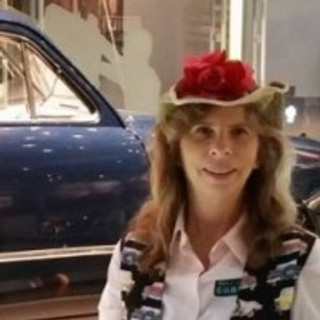
For this essay, I interviewed, Sarah Makin, the first person in U.S. history to serve as an advisor to the President on international religious freedom in the White House. She served on the National Security Council during President Trump’s first term.
Currently, she is Impact Producer (handling much of the marketing and outreach) for A Faith Under Siege, the recent documentary about state-sponsored Russian persecution of Christian churches in Ukraine. Her story is the classic unfolding of how listening to the Lord directed her into an amazing journey for helping Christians and other religious minorities under persecution around the world.
Here is her story.
Sarah lives in the Washington, D.C. area. She moved there after college. In college, she studied biology and chemistry, as well as serving as a researcher for an early detection method for autism, but she knew she did not want to go on to medical school. She loved science but also cared about many other issues, such as veteran and military issues, and she was a strong prolife advocate. Curious about how the federal government worked, she moved to D.C. and began working for a republican congressman from Virginia.
That was in 2006.
“The Congressman,” Sarah said, “gave me a ton of latitude because I think he recognized that I wasn't the typical kid who comes to D.C. to work. I really wanted to work and learn. And so I moved up quickly. And within a year, the House Republican Study Committee reached out to me and asked if I would come serve as a policy advisor.”
Sarah oversaw a wide range of policies for the Committee. She credits her background in science with giving her an analytical mind. She said, “I was able to sort of wrap my head around some really big policy issues. I became one of the staffers who would take a piece of legislation, read it, and then boil it down so that other staffers didn't have to read the whole thing.”
In 2011, a Congressman from Indiana, Mike Pence, became the House Republican Conference Chair, which is one of the positions in the Republican House leadership. He hired Sarah to be part of his team, and then created a new position called Director of Coalitions for her to serve in. Sarah said, “He was really the first to start this idea of a Coalitions Director on Capitol Hill. The concept was to have somebody who understood policy, understood the conservative perspective, and to talk with outside groups, whether those were think tanks or nonprofits, such as groups in the pro-life space.”
Fast forward to today. Now everybody on Capitol Hill has a Coalitions Director, so it's become a thing, but Mike Pence should get the credit for having started that; Sarah was his first. “It was an honor,” she said. “He is a humble and good man.”
After doing that work for a couple of years, Sarah left and went into the private sector as a consultant. In 2016, she got an unexpected phone call from Mike Pence, then the Governor of Indiana. Trump had just named him as his Vice President candidate in the 2016 election.
Sarah said, “I still remember the day I got that call. I was out walking my dog in the dog park. I'm going to be candid here. I'm a New Yorker, and I didn't love Donald Trump. I wasn't sold on him as our nominee at the time. But when Governor Pence called and said something along the lines of, ‘I'd love to have you on the campaign with me … I want you to pray about it.’
“I will never forget that he said that to me. He just made the quick pitch, and then said, ‘I want you to pray about it.’
“And again, I said to him, ‘I don't love this Trump guy, but all right, I'm going to pray about it.’
“So I did pray. And couple of days later, I went back to him, ‘I am in. What do you need?’ I was unmarried, with no children. It was time for me to go and give 24/7. Holy cow, did we!”
During the campaign, Sarah travelled with Mike Pence across the country. After he and Trump won the election, she was asked to serve on the transition team, helping to ensure the Vice President had everything he needed “ready to go for day one.”
Sarah said that the Trump team was extraordinary in so many things, but they just didn’t have the deep D.C. relationships, but Mike Pence did. “From early in the campaign, I was the one on our team collecting interest on behalf of people who wanted to be ambassadors or hold a position in the government. So the day after the election, we turned over the spreadsheets that I had been collecting for months. We really helped push in those first ‘beach head teams’ of government officials. It was just an incredible experience, sitting in the room listening to the Vice President talk with such talented and well-respected people. It was just extraordinary stuff.”

“I even have a picture my sister took of me, on vacation with my family in Florida at Thanksgiving, sitting on a pool lounge chair with my laptop, phone, and stack of papers, working on those spreadsheets. I am not sure my family really understood, but I knew we had to get the job done.”
Sarah’s journey was about to become more exciting. Vice President Pence asked Sarah to be his Director of External Affairs. This position came with a special “commission” in the White House. “It's rare,” she said. “There are three levels of commission. Essentially, it just gives you more authority and ability to get around bureaucratic hurdles. I didn't even know what it meant before I went in. And then when I got in, I learned really quickly. This means when I ask for something from folks at the State Department or USAID, they can't say, ‘No, you have to go through channels.’ They’ve got to provide me with the information at once. It was a wow--just incredible.”
It was in this position that Sarah began focusing on religious persecution – an issue the Vice President was already a leader on. Over the years, she had built many relationships, especially those in the faith community.
In 2014, you may recall that ISIS was actively killing Christians and Yazidis.
By 2016, the issue had become ever more pressing, and the Christian community in Iraq reached out for help from Vice President Pence’s office. The issue fell into Sarah’s lap.
Sarah explained, “They said we're so grateful for what the Trump administration is doing to defeat ISIS. But there is money going through the United Nations that the US is sending, and the UN is telling you guys that it's being spent to help us get our homes back, but it's not working.”
So, Sarah started digging into it. “Well, I certainly don't want us to be sending money to the UN and then it being misused. I brought it to the Vice President. The Christian community is something he has always deeply cared about. And so here’s another moment I won't ever forget. He kind of looked at me and was like, ‘Well, can you go there and fix it?’
“I was like, go where and fix what? So before I knew it, I was on a plane to Iraq. I went over there a handful of times. I got to know those communities, the Yazidis and the Christians, and we figured out a way to fix the issue. We moved the money we were sending through the UN and gave it through USAID, and then we oversaw how that money was being spent, so we could ensure that it was being spent effectively, efficiently, and serving those communities.”
Sarah remains close to these communities to this day.
“I still work with the Yazidis, pro bono to help whenever I can, because they have not gotten justice for what happened to them in 2014. I have heard from more than one Yazidi, ‘Why is it that the only people who come over here to care about us at all are people who follow Jesus? People like you or Samaritan’s Purse? What is it about this Jesus you follow?”
Sarah’s trips to Iraq did not just open a window into international religious freedom issues, but more broad foreign policy and international relations issues.
“What I was recognizing is that our own State Department civil servants, while very well meaning, neither they, nor our Ambassador in the country at the time, had any relationships with these religious communities. And so I started looking into that. I was like, how on earth can you be the Ambassador to Iraq and not know the leaders of the Christian and Yazidi community? And so, I thought, well, this is crazy. I mean, you don't know somebody at their core until you know their most personally held beliefs.”
Then Sarah learned this lack of awareness was a systemic issue in the State Department. Training in religious freedom was not included study material for foreign service officers. This was a shocking discovery for Sarah, “As a Foreign Service Officer, if you're taught to be allergic to the idea of considering somebody's religion when you're trying to engage with them, you're missing a huge piece of what's going on, right? So why? Why was our Foreign Service so allergic to even talking about it, right? [5] It did not seem to make any sense to me. So that is what started me on this path of religious freedom, of protecting religious freedom globally, and positioning the United States to be a leader in that. So I worked very closely with our Ambassador-at-Large for International Religious Freedom, Sam Brownback.”
Sarah said, “There were incredible, just incredible things done in the first Trump Administration on issues of international religious freedom.” During his tenure, Brownback was outspoken concerning China's treatment of Uyghurs, Tibetan Buddhists, Falun Gong practitioners, and underground Christians, stating, "China is at war with faith." He also denounced Iran’s persecution of religious minorities such as Christians and Sufi Muslims.
Brownback said to the Senate at his confirmation hearing, “This is a fundamental right that you have. To do with your own soul what you choose. This is your right. You need to be able to do it without interference by government or groups. This is a right that we will stand up and defend, wherever you are, whoever you are, whatever your belief or no belief at all.”[6]
Then Sarah added, “Ambassador Brownback created an incredible training that foreign service officers then had to go through. And the President signed an executive order requiring all foreign service officers to complete this training.” [7]
Of course, the Biden administration de‑emphasized “religious freedom” in his foreign policy.
“President Trump not only included Brownback’s training in that executive order (EO),” Sarah continued, “but that EO also stated that religious freedom is ‘America’s first freedom’ and a ‘moral and national‐security imperative.’ It declared that promoting religious freedom globally is a foreign‑policy priority for the United States. This had never been done before and it changed how we approached other countries. So pick China, pick Russia, pick whomever. That issue was now on the table. That was a huge move.” Sarah believes that the President has that same heart today for protecting people of all faiths, and especially religious minorities.
Another important event occurred in 2019 when the President went to speak at the UN General Assembly in New York, referred to as UNGA. He was given an opportunity to do a special “high-level” side event. At the time, the President’s team came to the Vice President’s team and asked for some options for what the President could focus on during this “high-level” event at UNGA. Sarah laid out three ideas, and one of them was to have an event on international religious freedom. “And that's the one he picked,” she said. “So, within a very short time, we threw together this big event at UNGA.” The President gave remarks, as did the Secretary‑General of the UN, Secretary of State Mike Pompeo, and Vice President Pence. We had faith leaders there, as well as business leaders representing companies that operated internationally, talking about how they wanted to operate in countries that respected religious freedom. It was an incredible event. And it was historic for the issue of international religious freedom.”
It was in early 2020 that the President asked Sarah to come serve on the National Security Council under his National Security Advisor, Robert O'Brien. She was the first ever Senior Advisor on International Religious Freedom. So, she resigned from her position in the Vice President’s office to do this job.
“When you're on the National Security Council, you have a lot of responsibility and authority, because the whole idea of the National Security Council (NSC) is to bring in people from all the different agencies and departments and get them at a table and talk about everyone's issues. The NSC is a convening body.” said Sarah. “Then they boil it down for the President to decide. So that was huge. We were able to advance so many incredible things, from the perspective of protecting religious minorities. With our support, the State Department formally recognized the Uyghur genocide and called it what it was.”
Sarah continues. “Kathryn, this is not out of pride that I want to share these things. It is genuinely because I want people to know how some of this works. I want them to know of the accomplishments in President Trump’s first term. I want them to encourage our President and continue to encourage him to do the right thing.”
Here is another example Sarah elaborated. “In 2018, when I was still in the VP’s office, President Muhammadu Buhari of Nigeria was coming for a visit with the President. It was going to be an Oval Office visit. This was a big deal. Nigeria is, I think, the largest country - population wise - in Africa. Kenya is number two … we have a lot of defense money that goes into Nigeria. So, there are many voices when it comes to our policy with regard to Nigeria. And at the time, I was hearing from non-profit non-governmental organizations about the Christian persecution going on in Nigeria by (mostly) Fulani Muslim groups. And we all knew about ISIS West Africa and Boko Haram, but there was more going on that wasn't being reported.
“I had an opportunity to ask for the briefing materials that were being sent to the President ahead of his visit with Buhari. I read them all, and there was no mention of what was going on between the Christians and the Muslims there. So I printed out an article from Open Doors USA that outlined the persecution of the Christians, walked it down to the VP’s office, and I told him that I had looked at the President’s briefing materials, and he wasn’t getting the whole picture. I told him that I believed the President ought to know about this. I was always of the mindset that you should trust him, the President, with all the information. Let him make the decision, right? But he has to have the information to do that.
“So, I remember the VP saying something like, ‘Is this accurate?’
“This is,” I said. “Yes, 100%.”
“So we walked it down to the Oval Office, gave it to the President.
“Fast forward a couple of days. President Buhari comes for his visit, and they're sitting there, doing their joint press conference. Then the President essentially asks him, ‘What are you going to do about the Christians who are being murdered in Nigeria?’
“For six months after the President spoke those words, the violence between Christians and Muslims declined markedly.
“So, that's an example of how if you give the President the information, he can deal with it and manage it in the way that he decides. Was it appropriate from a negotiating perspective? He clearly felt that it was the right moment to publicly say something. Because he could have said it to him privately, behind closed doors, right?”
Sarah added, “I began to understand why some of that information was not included. There were other equities within the government that wanted to protect the status quo with regard to Nigeria.
“But we can walk and chew gum at the same time. So we, during Trump’s first administration, found a way to include and talk about issues of international religious freedom without disrupting the other ‘big stuff’ that for many years always was the priority, and still is the priority. But religious issues like this were getting overlooked because other voices were so loud.
“This was just one example that I love to share because I do think it highlights President Trump’s care for persecuted religious communities – in this case, Christians - and the difference just one sentence could make,” said Sarah.
Then I quipped, “Wouldn't it be great for Trump to say, “And Vlad, when are you going to order your troops to stop bombing and destroying churches in Ukraine?”
Sarah answered, “That's exactly the point. Kathryn. The whole reason I signed up to help the team behind A Faith Under Siege is because I don't have the ability to just walk down to the Vice President anymore and give him that kind of information. I am not there to do that. I understand the urgency to find a way to help elevate these issues and get them back onto his (the President’s) desk.”
For the documentary, A Faith Under Siege, Sarah handles promotion, amplification, and coalition building. She is going back to people she has worked with for years to get them to write about it, talk about it, show the movie, and engage others in their networks. And she also provides strategic counsel and advice to the team from the perspective of having worked in the federal government, what she saw there, and how she learned about the way things work. “It has been a pleasure serving in that capacity for Colby (the movie producer) and the team.”
Sarah said, “I should say that the reason I've shared so much with you is I felt safe because you are so understanding. I also realize that the opportunities God has given me, and the experiences I’ve had, very often, I have not wanted to talk about them because I didn't ever to come across as self-aggrandizing, but now I look at what He gave me the opportunity to do, and I realized it may be an injustice that people don't hear about the ways He worked. So I try to share it in a way that makes it clear I'm talking about what HE has accomplished, using me as a vessel.”
I told Sarah, “What you’re talking about is how God led you and what happened. I think about how-- because I cared about Ukraine--that God has also worked for me in amazing ways. I learned about A Faith Under Siege from a man named Stu Bruguière, a producer for the Glenn Beck Show. He read a promotion for the movie on a commercial break. I nearly felt out of my chair because both he and Glenn Beck have not held a supportive position on Ukraine and had never once discussed the Russian persecution of the Ukrainian Christians. I was like “Wow! They finally are coming around.
“So I watched the movie as soon as I could, and I told my husband, I said, “We have to show this to our friends. And, as a result of that film, my life and so many others has been enriched. I've met you. I've met the Producer, Colby Barrett. I met a local pastor named Bill Rigsby, a wonderful guy who's been providing aid in Ukraine for 18 months. All of you are part of my journey. And I just feel led by the Holy Spirit whenever I meet people who live out their faith and do amazing, good things with their lives. You are a faith-led person.”
Our interview ended, but our friendship has now begun. Please watch the movie A Faith Under Siege and tell your friends. Click here: www.afaithundersiege.com
Thank you for reading. Please send your comments to Kathryn@TexasHeritage.net.
[3] Jeff Nyquist essay on Lenin. https://jrnyquist.blog/2025/05/17/political-fantasy-vs-reality-why-lenin-remains-above-ground-in-moscow/
[4] Martin Luther King Jr., Research and Education Institute, Stanford University, September 30, 1962. https://kinginstitute.stanford.edu/king-papers/documents/can-christian-be-communist-sermon-delivered-ebenezer-baptist-church
[5] Worth a read on this issue --> https://berkleycenter.georgetown.edu/posts/the-missing-dimension-of-institutionalized-religious-literacy-remains-missing
[6] EWTN, October 4, 2017. https://www.youtube.com/watch?v=1pzmZjj6pf0
[7] President Trump’s Executive Order 13926: Here is the EO --> https://trumpwhitehouse.archives.gov/presidential-actions/executive-order-advancing-international-religious-freedom/


